
From Cameroon to Geneva: Global Divide Facilitates JRCCA/JRFIUSA’s First Treaty Body Engagement
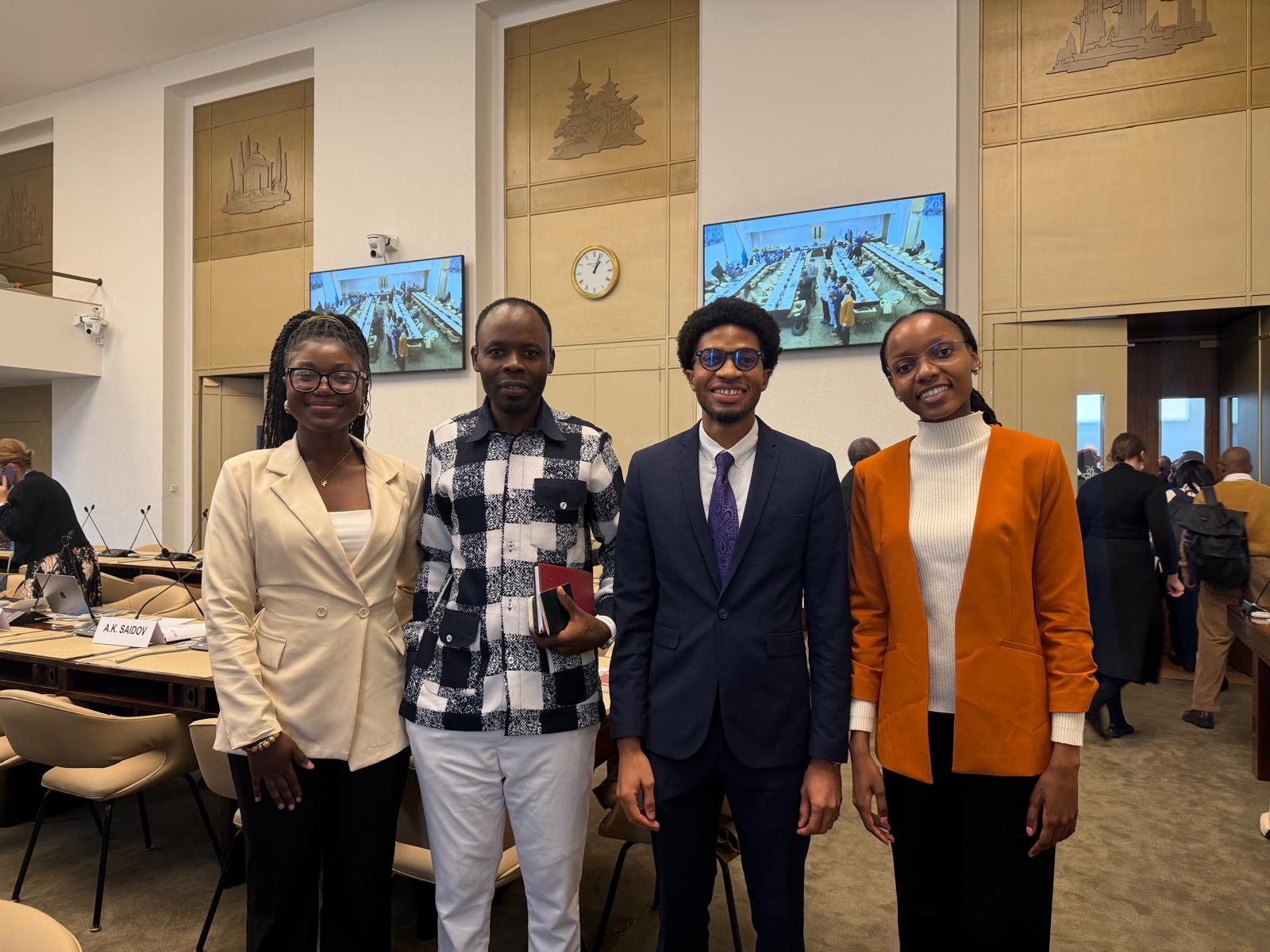
Cameroon’s delegation before the UN Human Rights Committee in Geneva, October 2026.
For the first time, John Retreat Center Cameroon Association (JRCCA), working alongside John Retreat Foundation International-USA (JRFIUSA), participated in an international treaty body process during the UN Human Rights Committee’s 146th session in Geneva in October 2026.
The engagement concerned the Committee’s examination of Cameroon’s sixth periodic report under the International Covenant on Civil and Political Rights (ICCPR). It offered JRCCA/JRFIUSA an opportunity to bring the experiences of communities affected by conflict and displacement in Cameroon’s North-West Region into an established international human rights process.
Global Divide supported the preparation of a written civil-society submission and a two-minute oral statement, and coordinated a five-person expert delegation in Geneva. The delegation included a representative of Cameroonian nationality, reflecting our commitment to incorporating local perspectives and lived experiences into international policy representation.
Bringing community concerns before the Committee
The organisations’ engagement focused on the consequences of insecurity and displacement for access to education, particularly the difficulties experienced by vulnerable learners and communities seeking to restore schooling.
Government Technical College Zang-Tabi, in the Mbengwi area of Cameroon’s North-West Region, provided a reference point for wider concerns about disrupted education, the protection of displaced learners and the importance of involving affected communities in recovery efforts.
On 19 October, Global Divide’s representative delivered the organisations’ oral intervention during the Committee’s formal NGO briefing. Other members of the delegation attended relevant briefings and public review meetings, documented proceedings and engaged with civil-society representatives working on related issues.
The participation gave JRCCA/JRFIUSA a direct channel through which to communicate its concerns to an international treaty-monitoring body.
Representation without the cost of international travel
An important feature of the engagement was that JRCCA/JRFIUSA’s leadership did not need to travel to Geneva to participate.
International policy engagement can impose substantial financial and logistical demands on organisations, particularly those working with limited resources. Travel, accommodation, institutional procedures and the need for specialised expertise can place meaningful participation beyond the reach of many NGOs.
Global Divide’s representation model addresses these barriers by coordinating relevant expertise in UN host cities around the priorities of the organisations we support.
For JRCCA/JRFIUSA, this meant accessing the Human Rights Committee’s review through a coordinated delegation while retaining ownership of the concerns advanced on behalf of the communities they serve.
The October engagement established an institutional record that the organisations can draw upon in their continuing advocacy.
For Global Divide, it also marked our first engagement with a UN treaty body, extending our work to another important part of the United Nations system.
Our objective remains to make international policymaking more accessible to organisations whose perspectives deserve to be heard, regardless of their ability to maintain a physical presence in Geneva.