by Chathurya Wanniarachchi & Abigail Adu
International policy spaces often describe themselves as open forums: places where governments, experts and civil society come together to exchange ideas and shape solutions. But there is a question that deserves more attention: who actually gets to speak once they are in the room?
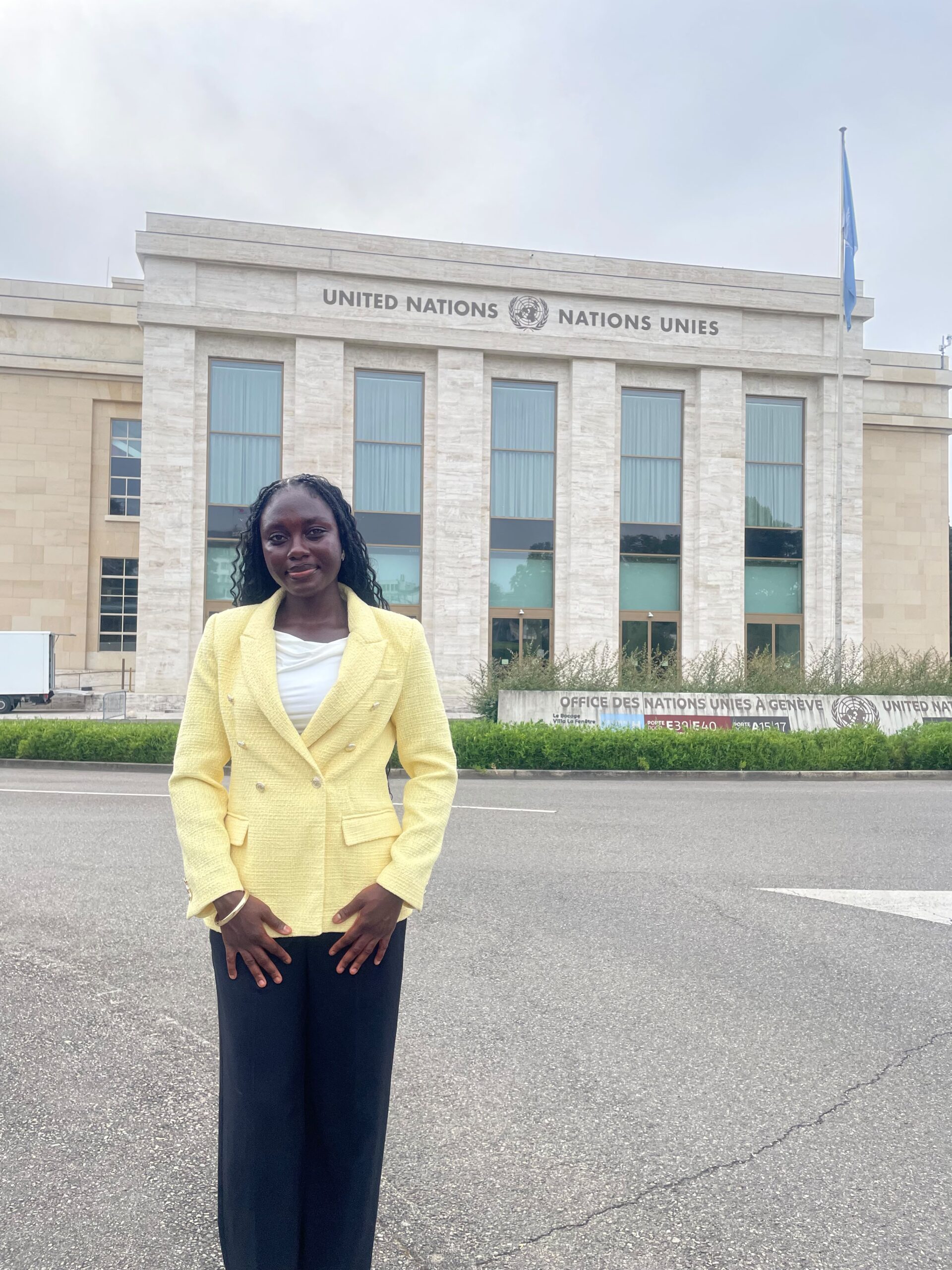
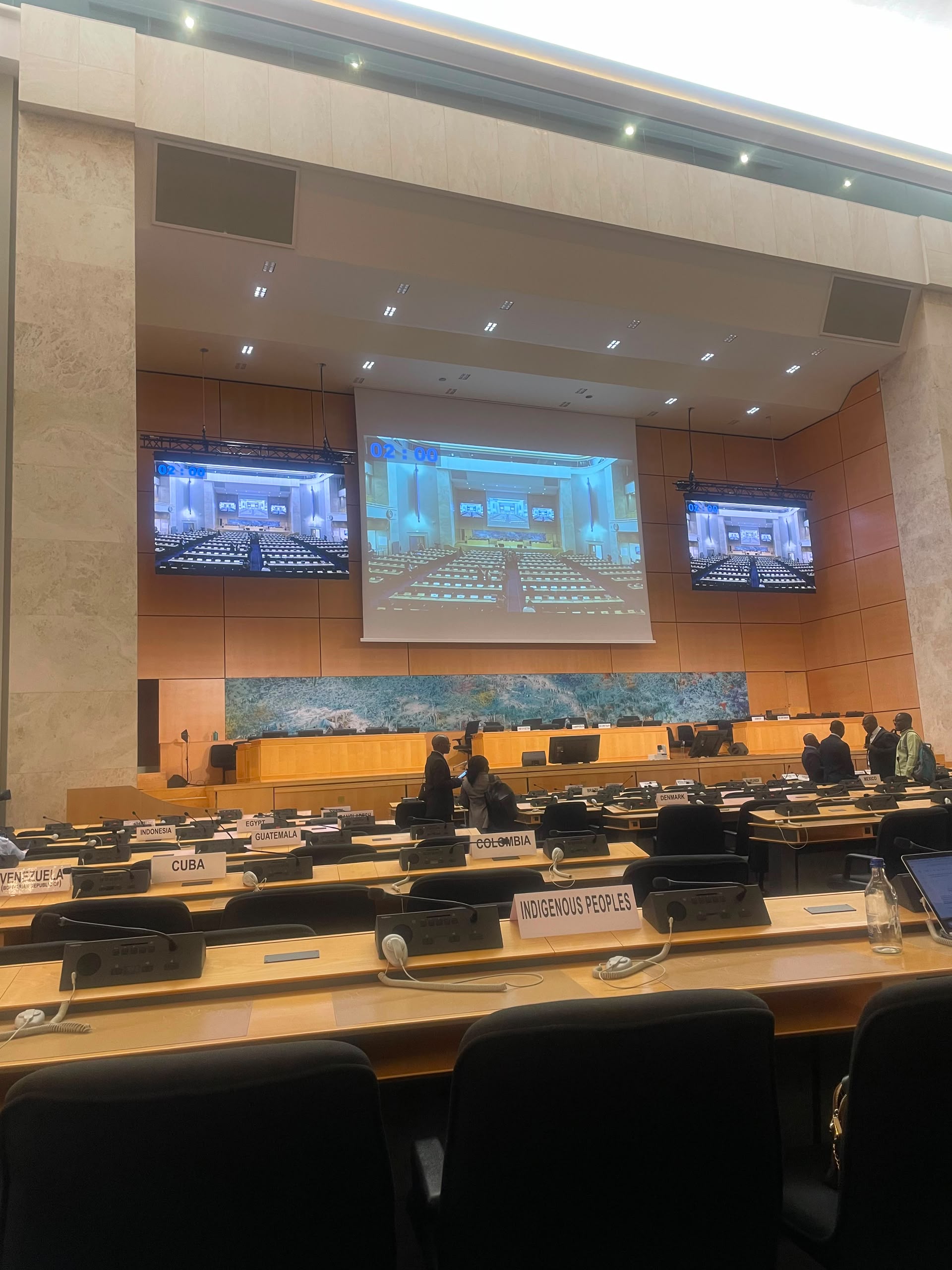
That question became particularly tangible during the 19th session of the United Nations Expert Mechanism on the Rights of Indigenous Peoples (EMRIP), held in Geneva from 13-17 July 2026. During the session, Abigail Adu, a volunteer with Global Divide, delivered oral statements on behalf of organisations working with Indigenous communities in Cameroon. Her reflections offer a useful window into a much broader problem: international participation may be formally available, while remaining practically unequal.
Getting into the room is only the beginning
For Abigail, registration was relatively straightforward. She registered approximately one month before the session through the UN’s Indico platform, submitted the required NGO accreditation and nomination documentation, and received approval within two days.
Her experience also made visible a less obvious divide. International participation requires resources. Flights, accommodation, visas, staff time and preparation can make attending a meeting in Geneva prohibitively expensive for a small organisation. During EMRIP, some Indigenous organisations benefitted from support through the UN Voluntary Fund for Indigenous Peoples, while others attended using their own resources. Those without the financial capacity to cover travel and accommodation consequently faced greater difficulty participating.
This is not simply an anecdotal problem. UN research on NGO participation has recognised that insufficient funding places organisations from the Global South at a disadvantage and that organisations headquartered in the Global North are more likely to obtain consultative status. It has also identified the complexity of accreditation requirements as a barrier, particularly for organisations with fewer administrative resources. (Ecosoc)
The result is a paradox: the people closest to an issue may be the least able to afford to participate in the international conversations about it.
Representation is not the same as participation
The more difficult question, however, comes after accreditation.
During the EMRIP session, another Global Divide volunteer was scheduled to deliver an oral statement on behalf of the Ugandan NGO Saf Teso. She ultimately could not speak because the number of participants had exceeded expectations and the programme had insufficient time for everyone. The organisation had been admitted, registered and prepared to participate, but it did not get the opportunity to use its voice.
The UN itself recognises that NGO participation can include oral and written statements, while also making such participation subject to procedural and time constraints. (United Nations) In other words, access to a process does not necessarily guarantee meaningful influence over that process.
Saf Teso’s experience was particularly striking because, according to the reflections, it had also sought to participate in UNCTAD earlier that year but had not received approval. The reasons for that decision are not known, and it would be inappropriate to assume why the application was unsuccessful. But from the organisation’s perspective, the result was two different forms of exclusion: an inability to enter one policy space and an inability to speak in another.
This is where the language of meaningful participation becomes important.
The Global South participation gap
The problem extends beyond any one UN mechanism. The UN currently has more than 6,494 NGOs in active ECOSOC consultative status, reflecting the enormous role civil society plays in international policymaking. Consultative status can allow organisations to attend UN meetings, submit written statements, make oral interventions and engage with governmental bodies. (Ecosoc) Yet numbers alone cannot tell us whether participation is equitable.
An organisation with a large international fundraising base, a Geneva office and dedicated policy staff operates very differently from a small community-based organisation in Cameroon, Uganda or elsewhere in the Global South. The latter may possess invaluable knowledge but lack the resources to translate that knowledge into sustained international engagement.
There is also a geographical dimension. International policymaking frequently happens in a small number of global cities. For organisations based far from these centres, participation can mean hours of travel, expensive flights, accommodation and navigating unfamiliar accreditation systems.
This creates what might be called a participation paradox: institutions can become increasingly open to civil society while the practical conditions of participation continue to favour organisations that already possess international resources.
Even sustainability can raise questions about equity
Abigail encountered another interesting tension during registration: questions connected to the OHCHR’s NetZero initiative, including how participants would travel long distances to Geneva by air and whether they would use reusable water bottles. She recognised that living in Geneva and being able to use public transportation gave her an advantage. But she also questioned whether sustainability requirements might affect organisations travelling long distances to attend international meetings.
The environmental objective is understandable. But climate-conscious international policymaking must also consider who bears the cost of participating in it.
A policy designed in the name of sustainability should not inadvertently make already unequal access even more unequal. The answer may lie not in abandoning environmental standards, but in pairing them with greater support for remote participation, travel assistance and equitable funding.
From invitation to influence
So what would meaningful participation actually look like?
First, funding must follow participation. Accreditation without financial support can leave smaller organisations technically included but practically excluded.
Second, international forums should invest in hybrid and remote participation, particularly where physical presence is not essential.
Third, speaking opportunities should be distributed transparently, with attention to geographical diversity, organisational size and representation of affected communities.
Fourth, institutions should measure participation not simply by how many NGOs attend, but by whose interventions are heard, incorporated and reflected in outcomes.
And finally, Global South organisations should not be treated merely as beneficiaries or sources of testimony. They should be recognised as policy actors and knowledge producers in their own right.
The UN’s own Non-Governmental Liaison Service describes meaningful civil-society engagement as more than attendance: it includes facilitating participation, coordinated inputs, statements, advocacy and outreach. (United Nations)
That distinction is crucial.
The question is no longer simply “Were they invited?”
It is: “Could they afford to come, were they able to speak, and did anyone listen?”
For international policymaking to genuinely reflect the communities it serves, being in the room cannot be the endpoint. Having the resources, opportunity and institutional space to shape what happens in that room must be the standard.